

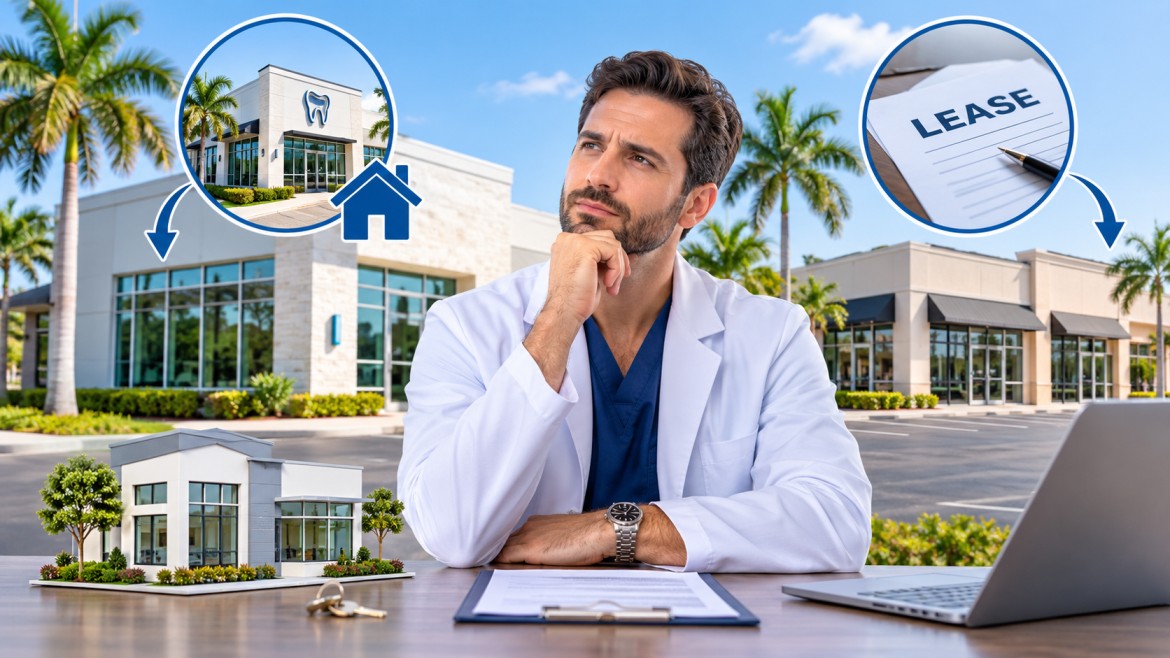
Dentists evaluating a Florida dental office for sale eventually face a pivotal real estate decision that shapes their wealth trajectory for decades: Should you acquire a practice housed in a leased retail suite, or target an opportunity that includes the underlying commercial real estate? Across high-growth corridors from Brevard County and Orlando down to Broward and Miami-Dade, rising triple-net rent escalations and strict landlord assignment clauses have made real estate ownership an increasingly compelling component of dental acquisitions.
The Long-Term Equity Case for Free-Standing Buildings
When you acquire a dental practice with real estate, such as a free-standing medical building in Merritt Island or a multi-operatory corner facility in Sunrise, you effectively become your own landlord. Rather than sending monthly lease checks to an institutional developer with zero equity return, your clinical entity pays market rent directly into a separate real estate holding company you control, building tangible property equity alongside clinical goodwill.
- Insulation from Aggressive Rent Spikes: Commercial triple-net (NNN) leases in booming Florida suburbs frequently include 3% to 4% annual rent escalators alongside rising property tax and commercial insurance pass-throughs. Owning the building locks in predictable long-term occupancy costs.
- Dual-Asset Retirement Optionality: Upon eventual retirement, doctors who own their buildings enjoy unmatched flexibility. You can either sell the commercial real estate and dental practice together for a substantial combined payout, or sell the clinical practice while retaining the building as a reliable, passive income-producing asset leased back to the incoming dentist.
- Zero Landlord Assignment Friction: Leased practice transitions frequently stall waiting for landlord estoppel certificates, personal credit reviews, or steep lease transfer fees. Owning the underlying property eliminates third-party real estate vetoes during both acquisition and future exit.
- Tax Depreciation Advantages: Real estate ownership unlocks substantial cost-segregation and building depreciation write-offs that help offset clinical practice income over the life of the loan.
Searching for practices that include property ownership? Filter our active Florida dental listings by “With Real Estate” or “Free Standing Building Location” today.
When Commercial Leasing Remains the Smarter Play
Despite its equity advantages, real estate ownership is not always feasible or optimal, particularly in dense urban hubs like Brickell, Coral Gables, or downtown Orlando, where commercial condominium prices can strain initial borrowing capacity. In prime high-foot-traffic shopping plazas anchored by major grocers or national pharmacies, leasing allows a buyer to preserve capital for digital scanning technology and marketing while benefiting from built-in retail visibility. If you pursue a leased office, ensure the landlord grants at least ten years of combined base term and tenant-controlled renewal options so your acquisition loan amortizes smoothly without refinancing anxiety.
Structuring Combined Practice and Property Financing
Healthcare-focused banks routinely finance combined practice and real estate purchases using conventional commercial mortgages or SBA 504/7(a) programs, often amortizing the real estate portion over 20 to 25 years to keep monthly debt service highly manageable. Working alongside Dental Broker Florida helps buyers compare cap rates, square-footage comps, and combined debt coverage across both leased and owned opportunities.
If you are comparing commercial real estate and lease dynamics in South Florida specifically, read our regional breakdown on acquiring a dental office in Miami.
Frequently Asked Questions
Can I finance both the dental practice and the commercial real estate in one transaction?
Yes. Specialized dental lenders and SBA commercial loan programs regularly bundle practice goodwill, equipment, and owner-occupied real estate into a single coordinated closing package.
What percentage of space must my dental clinic occupy to qualify for owner-occupied real estate financing?
Most commercial and SBA lenders require the acquiring dental practice to occupy at least 51% of the building’s total rentable square footage, allowing you to lease out any remaining medical suites to complementary tenants.
How do lenders value the real estate portion of a combined sale?
The clinical practice is valued separately through cash flow and EBITDA multiples, while the building is appraised independently by a certified commercial appraiser using local square-footage comps.
Should I hold the dental building in a separate LLC from my clinical practice?
Yes. Most healthcare CPAs and attorneys recommend placing the real estate in a separate holding LLC that leases the space back to your dental operating entity for liability protection and tax efficiency.
What is a triple-net (NNN) lease in a commercial dental office?
A triple-net lease requires the tenant dentist to pay base rent plus their proportionate share of property taxes, building insurance, and common area maintenance (CAM) expenses.
Is it easier to sell a dental practice later if I own the building?
Yes, owning the real estate eliminates landlord lease-transfer delays and allows you to either sell both assets together or collect passive rental income from the buyer in retirement.
Explore opportunities that build both clinical cash flow and long-term property equity. Connect with our advisory team today to review available dental offices with real estate.